The Harsh Laws of Human Behavior We All Learn the Hard WayEvery once in a while, you come across a list that hits a little too close to home. Not because it’s negative, but because it’s honest. The seven “harsh laws of human behavior” floating around online lately are exactly that — blunt truths most people experience but rarely talk about.
I want to break them down, expand on them, and explore why they resonate so deeply with so many of us.
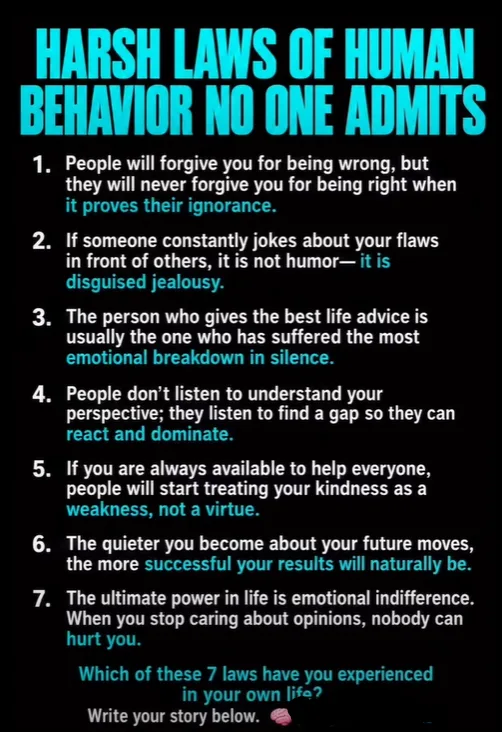 1. People forgive you for being wrong — but not for being right.
Being right shouldn’t be a crime, but sometimes it feels like one.
When your correctness exposes someone else’s blind spot, insecurity kicks in. Instead of appreciating the clarity, they resent the reminder that they missed something.
This isn’t about ego — it’s about how fragile people can feel when confronted with their own gaps.
2. “Jokes” about your flaws aren’t jokes. They’re jealousy in disguise.Humor is often used as a socially acceptable delivery system for envy.
If someone repeatedly targets your strengths, achievements, or traits under the guise of “just kidding,” pay attention. People rarely mock what they don’t secretly wish they had.
3. The best advice comes from the people who’ve suffered silently.The strongest people are often the quietest.
They’ve lived through storms without broadcasting their pain, and because of that, their advice carries weight. It’s not theoretical — it’s earned.
4. Most people listen to respond, not to understand.This one hurts because it’s true.
Real listening requires humility, patience, and curiosity — qualities that aren’t always present in everyday conversations. Many people are waiting for their turn to speak, not your chance to be heard.
5. If you’re always available, people treat your kindness like weakness.Over‑giving creates imbalance.
When you show up for everyone, all the time, people begin to expect it. What started as generosity becomes obligation, and eventually, they stop seeing the value in what you offer.
Boundaries aren’t selfish — they’re necessary.
6. Silence is a superpower.The less you announce, the more you accomplish.
Quiet progress protects you from criticism, sabotage, and unnecessary opinions. When you move in silence, people only see the results — not the struggle, not the doubt, not the process.
7. Emotional indifference is the ultimate freedom.Not apathy —
indifference to unnecessary opinions.
When you stop letting people’s reactions dictate your self-worth, you become untouchable. Emotional independence is one of the most powerful forms of strength.
Why These Laws Hit So HardBecause they’re universal.
Whether you’re neurodivergent, highly sensitive, introverted, or simply self-aware, you’ve felt at least one of these truths in your own life.
They’re not meant to make you cynical — they’re meant to make you conscious.
Understanding human behavior helps you:
- protect your energy
- choose better relationships
- set boundaries
- stop internalizing other people’s issues
- move through the world with clarity instead of confusion
These laws aren’t about becoming cold. They’re about becoming wise.
Your TurnWhich of these hit you the hardest?
Which ones have you lived through?
What did they teach you?
Share your story — your experience might be exactly what someone else needs to read today.


Post Comments
No comments yet.